
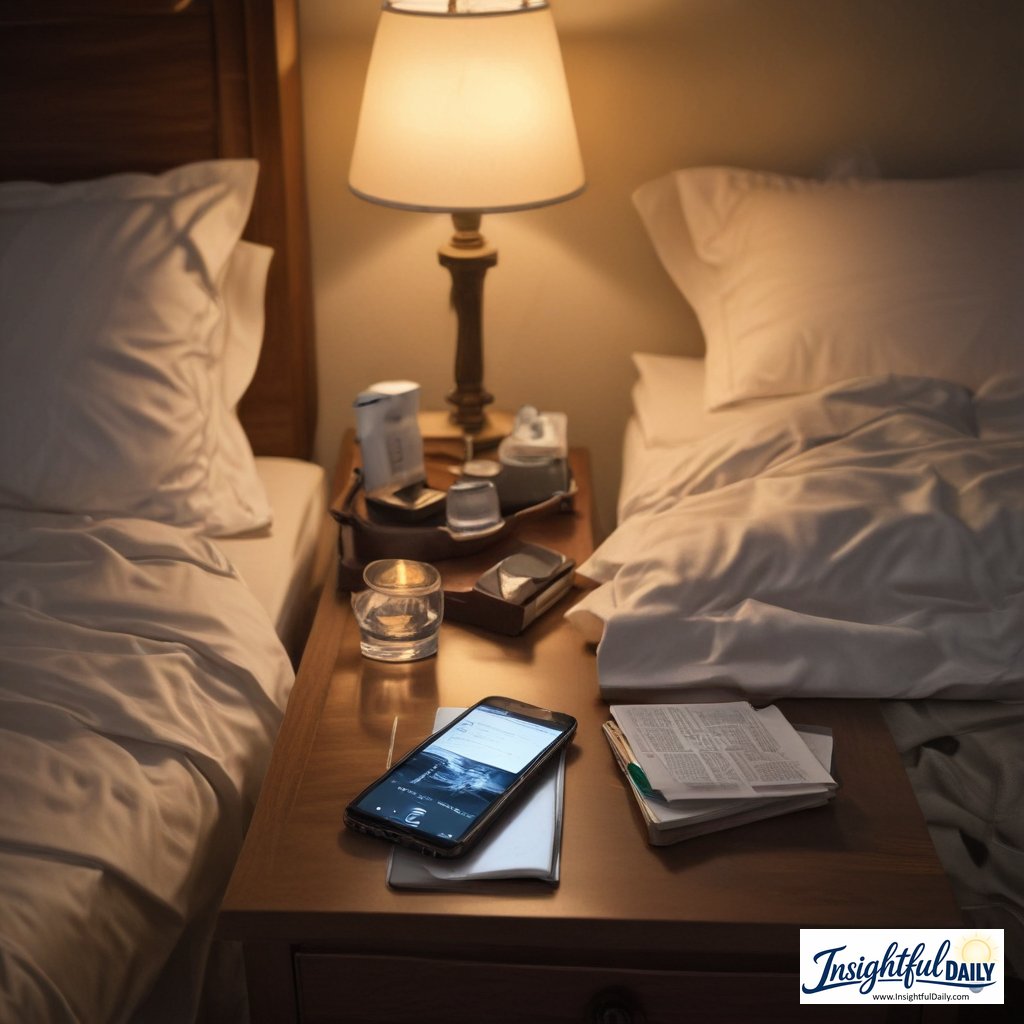
I had gotten into the habit of checking my phone right before bed.
Sometimes it was only supposed to be for a minute, but it usually turned into more scrolling than I planned. I would check one message, then one app, then one video, and before I knew it, the quiet part of the evening had disappeared.
So I tried one simple change for 7 days:
No phone during the hour before bed. The hardest part was not the rule itself. It was realizing how automatic the habit had become.
Here’s what happened.
The 7-Day No-Phone-Before-Bed Experiment
What I tested: Avoiding my phone for the final hour before bed for 7 days.
Why I tried it: I noticed that checking my phone at night often turned into more scrolling than I intended. I wanted to see whether creating a clearer cutoff would make my evenings feel less scattered.
The rule: No phone during the hour before bed. I could still use my phone earlier in the evening, but once the cutoff started, I put it away.
What I paid attention to: How often I reached for my phone, what I did instead, how the evening felt, and whether the habit became easier by the end of the week.
What I did not track: I did not measure sleep quality, medical outcomes, or anything clinical. This was a personal routine experiment, not sleep advice or health advice.
Important note: This was a short personal experiment. The results may be different for someone with a different schedule, household routine, job, stress level, or sleep needs.
What My Nights Looked Like Before
Before trying this, my phone had become part of my bedtime routine without me really choosing it.
I would get ready for bed, sit down for a minute, and check something quickly. Most nights, that “quick check” turned into scrolling.
The problem was not that I was doing anything important. Most of the time, I was not.
I was just filling the last part of the day with more input:
- messages
- short videos
- random articles
- social media
- notifications
- things I could easily check the next day
The habit felt harmless because it was familiar. But when I paid closer attention, I realized it made the end of the day feel less calm.
Why I Chose One Hour
I did not want to create an extreme rule.
I was not trying to remove technology from my life or avoid my phone all evening. That would have been unrealistic for me.
One hour felt like a reasonable test.
It was long enough to create a clear boundary, but short enough that it did not feel impossible. I could still use my phone earlier in the evening, answer messages, check anything important, and then put it away before bed.
That made the experiment feel practical instead of strict.
What Happened During the 7 Days
Day 1: I reached for my phone automatically
The first night showed me how automatic the habit was. I put my phone away, then reached for it a few minutes later without even thinking. I was not looking for anything specific. My hand just moved toward it because that was what I normally did. That was the first useful part of the experiment. It made the habit visible.
Day 2: The quiet felt strange
On the second night, the hour before bed felt oddly quiet.
That surprised me. I had not realized how much I was using my phone to fill small gaps. Without it, the evening felt slower. At first, that felt uncomfortable, not relaxing. I kept wanting something to check. Instead of grabbing my phone, I tried doing simple things: getting ready earlier, tidying one small area, reading a few pages, or just letting the evening slow down.
Day 3: I needed a replacement, not just a rule
By the third night, I realized that “don’t use your phone” was not enough. If I did not have something else to do, I was more likely to feel restless and reach for it again. So I made the rule more practical. Instead of only removing the phone, I picked a few simple replacements:
- set out clothes for the next day
- write down the first task for tomorrow
- clean up the desk or kitchen counter
- read something light
- make tea or water
- stretch for a few minutes
- leave the phone charging outside arm’s reach
The replacement activities did not need to be impressive. They just needed to make the last hour of the day feel less empty.
Day 4: Putting the phone away earlier helped
The biggest practical change was physical. If my phone stayed next to me, the rule was much harder. Even if I did not plan to use it, seeing it made me want to check it. So I started putting it somewhere else before the final hour began. That made the rule easier because I did not have to rely on willpower every few minutes. The phone was simply not right next to me. This was one of the most useful changes from the whole experiment.
Day 5: The evening felt less scattered
By the fifth night, the last hour of the day started to feel less scattered. Not perfect. Not dramatically different. Just calmer. Without the constant checking, there were fewer random inputs right before bed. I was not jumping between messages, videos, posts, and thoughts about tomorrow.
The evening had a clearer ending. That was the main difference I noticed.
Day 6: I still wanted to check it
The habit did not disappear in a week. On Day 6, I still wanted to check my phone. The difference was that I noticed the urge more clearly. Instead of assuming I needed my phone, I could ask myself:
“Is there actually something I need to do, or am I just reaching for it automatically?”
Most of the time, it was automatic. That made the habit easier to interrupt.
Day 7: The rule felt more realistic than expected
By the end of the week, the no-phone hour felt more realistic than it had at the start. It was not always easy, but it was simple. I did not have to change my entire evening routine. I just needed a clear cutoff and a few replacement habits. The biggest change was that I stopped letting my phone decide how the day ended.
What Changed the Most
The biggest change was not that I suddenly had a perfect bedtime routine. The biggest change was that the final hour of the day felt more intentional. Before the experiment, my phone filled that space automatically. After a few days, I started using that time more deliberately.Sometimes that meant preparing for the next day. Sometimes it meant reading. Sometimes it meant doing almost nothing. But it felt different because I was no longer scrolling by default.

What Helped Most
1. Moving the phone away
Keeping the phone out of reach helped more than trying to “just be disciplined.”
If the phone was beside me, I checked it. If it was across the room or charging somewhere else, I was much less likely to grab it without thinking.
2. Choosing a replacement activity
The rule worked better when I knew what to do instead. The best replacements were simple and low-effort. I did not need a perfect evening routine. I just needed something that made the hour feel usable.
3. Making the cutoff clear
A vague rule like “use my phone less at night” would not have worked as well.
“One hour before bed” was clear. I knew when the rule started, and that made it easier to follow.
What Did Not Help
Trying to rely on willpower did not help. If the phone was next to me, I still wanted to check it. Telling myself not to use it was not enough.
Making the replacement routine too ambitious also did not help. If I tried to turn the final hour into a perfect routine with reading, journaling, stretching, cleaning, and planning, it felt like too much. The habit worked best when it stayed simple.
What I Would Do Differently
If I did this again, I would make the setup easier from the start.
I would:
- choose the phone cutoff time ahead of time
- charge the phone outside arm’s reach
- decide on one simple replacement activity
- write down anything important before the cutoff
- avoid using the phone as the last thing I touch before bed
The more decisions I removed, the easier the habit became.
Who This May Help
This may be useful if you often check your phone right before bed and end up scrolling longer than planned. It may also help if your evenings feel scattered, if you want a clearer end to the day, or if you are trying to make your nighttime routine feel less reactive. It may not be realistic for everyone. Some people need their phone nearby for work, family, caregiving, safety, alarms, or emergencies. The point is not that everyone should follow this exact rule. The point is to test whether creating a phone-free final hour makes your evening feel easier to manage.
A Simple Version to Try
If one full hour feels too difficult, start smaller.
Try this:
- Pick a phone cutoff time.
- Put the phone somewhere out of reach.
- Choose one replacement activity.
- Keep the rule for 7 days.
- Notice what changes and what feels difficult.
Even 20 or 30 minutes may be a more realistic starting point for some people. The best routine is the one you can actually repeat.
Final Takeaway
Stopping phone use one hour before bed for 7 days did not magically fix everything. But it did make the end of the day feel less scattered.
The biggest lesson was that the phone habit was more automatic than I realized. Once I created a clear cutoff, I noticed how often I reached for it without a real reason. For me, the most helpful part was not the rule itself. It was creating a calmer ending to the day — one that did not depend on another scroll, another notification, or another quick check.
I would not call it a perfect solution. But I would call it a simple experiment worth trying.