A vision board can be a simple way to organize goals visually. Instead of keeping ideas scattered in your head, you collect images, words, and reminders that represent what you want to focus on next. It does not need to be mystical or complicated. The useful part is that it helps you clarify priorities and keep them visible.
The most helpful vision boards are specific and realistic. Instead of filling the board with vague dream images, choose reminders that connect to actions you can actually take: routines you want to build, projects you want to finish, places you want to save for, or habits you want to practice more consistently.
Why a Vision Board Can Be Useful
A vision board works best as a visual reminder, not a guarantee that goals will happen automatically. Seeing your goals regularly can make it easier to notice whether your daily choices match what you say matters. The real value comes from pairing the board with small actions, regular review, and honest adjustments over time.
Goal Board Prompts for Different Areas of Life
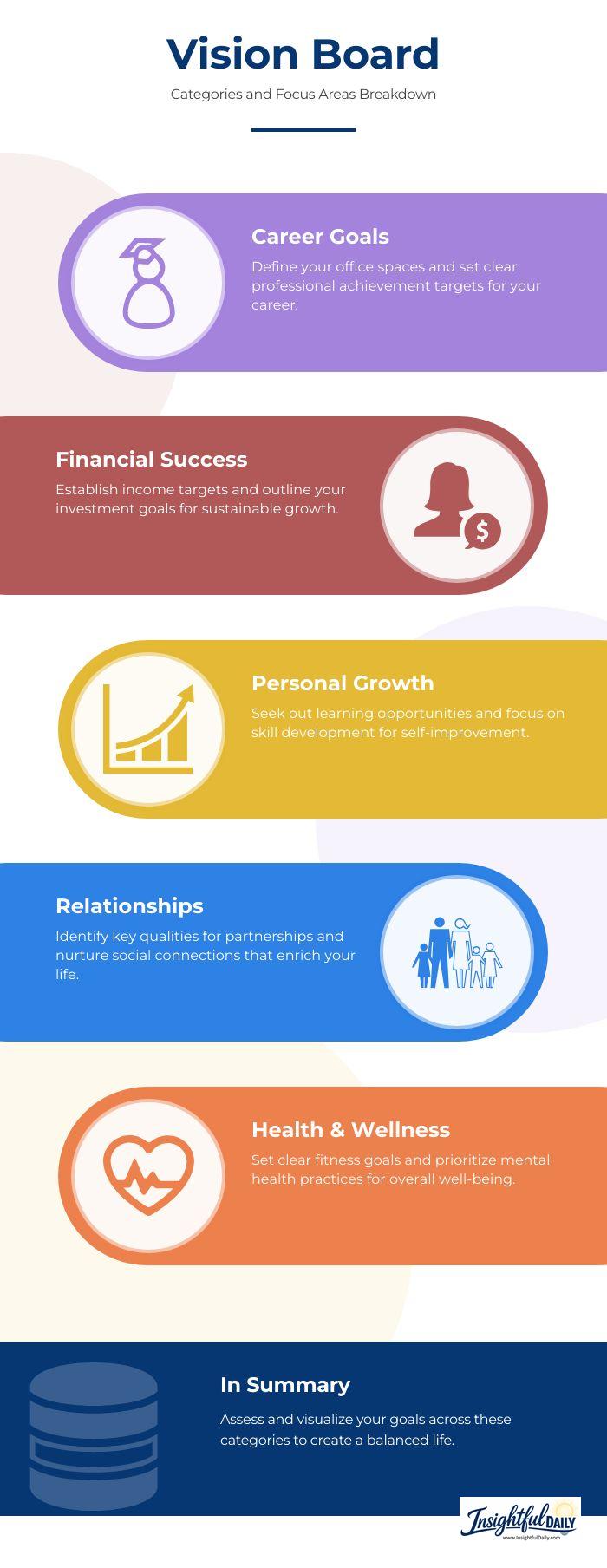
Career and professional vision board ideas should focus on specific positions, work environments, and professional achievements that align with your long-term career trajectory. Include images of your ideal workspace, whether that’s a corner office, a creative studio, or a home office setup that supports your productivity and satisfaction. Incorporate visual representations of the skills you want to develop, certifications you plan to earn, or conferences you hope to attend. Professional vision boards benefit from including salary figures, company logos of organizations you’d like to work with, and images that represent the impact you want to make in your field. Consider adding photographs of successful professionals you admire or quotes that capture your professional values and aspirations. These career reminders can make your next steps feel clearer.
For money-related goals, it helps to focus on both the number and the habits behind it. Rather than simply including large dollar amounts, create visual representations of financial freedom through images of debt-free living, investment portfolios, or the security that comes with emergency funds. Include pictures of experiences you’ll enjoy with financial abundance – travel destinations, educational opportunities, or the ability to support causes you care about. Effective financial vision boards also incorporate images representing multiple income streams, passive income sources, or business ventures that align with your skills and interests. Remember to include visual reminders of healthy financial habits, such as organized budgeting systems or investment learning resources that support long-term wealth building.
For relationships and personal growth, choose reminders that reflect the kind of connection and daily life you want to build. For romantic relationships, include images that represent the qualities and experiences you desire in a partnership – shared adventures, emotional intimacy, mutual support, or family goals if applicable. Personal growth sections might feature books you want to read, workshops you plan to attend, or physical challenges you want to overcome. Social connection images could include friend groups engaged in activities you enjoy, community involvement opportunities, or mentorship relationships. Personal growth vision boards should also include representations of the person you’re becoming – confident body language, peaceful expressions, or images that capture your desired emotional state and personal values. These relationship-focused vision board ideas help clarify what you truly want in your connections with others while attracting aligned opportunities and people into your life.
How to Make a Simple Goal Board
Beginning your vision board creation process requires thoughtful preparation and goal clarification before you start gathering materials or images. Start by conducting a comprehensive life assessment, identifying areas where you want to experience growth, change, or achievement over the next 6-24 months. Write down specific, measurable goals for each life area you want to include on your vision board, ensuring these goals are realistic yet challenging enough to inspire consistent action. This preliminary goal-setting session should result in a clear list of 5-10 primary objectives that will guide your image selection and board layout. Consider timing elements as well – some goals may be short-term (3-6 months) while others represent longer-term aspirations (1-3 years). Effective vision board ideas always begin with this crucial planning phase that ensures your finished board accurately reflects your authentic desires and priorities.
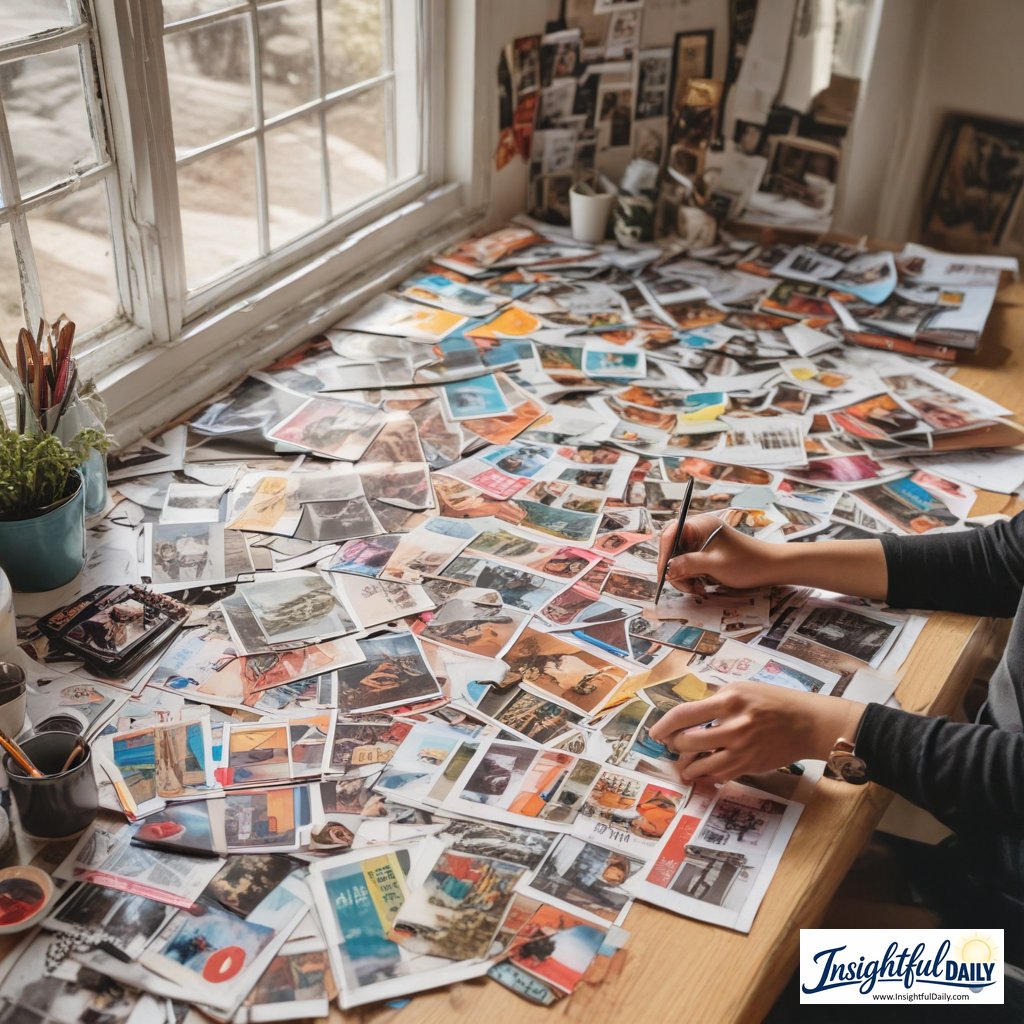
The material gathering phase for physical vision boards involves collecting high-quality magazines, printed photographs, inspirational quotes, and crafting supplies that support your creative vision. Choose magazines that align with your goal areas – business publications for career goals, travel magazines for lifestyle aspirations, or health and wellness publications for fitness objectives. Invest in quality poster board or cork board that will withstand regular viewing and occasional updates. Gather sharp scissors, strong adhesive glue or glue sticks, colored markers for adding personal touches, and protective coating materials if you plan to display your board in areas with varying lighting or humidity. Consider creating a dedicated workspace where you can spread out materials and work without interruption for several hours. Many successful practitioners recommend visiting Pinterest for inspiration and ideas before beginning the physical creation process.
The image selection and arrangement process requires balancing emotional resonance with practical representation of your goals. Choose images that immediately evoke positive emotions and excitement about your future possibilities, even if they don’t represent exactly what you want. Sometimes an image that captures the feeling of achievement or success is more powerful than a literal representation of a specific goal. Arrange images in a way that creates visual flow and allows each goal area adequate representation without overwhelming the overall design. Consider size hierarchy – making your most important or time-sensitive goals slightly larger or more centrally positioned. Leave some white space around images to prevent visual clutter and allow your eye to focus on individual elements when viewing the board. The most effective vision board ideas incorporate both specific goal representations and emotional imagery that captures the feelings associated with achieving those goals.
The final assembly and placement phase involves securing all elements permanently and establishing a viewing routine that maximizes the board’s effectiveness. Use strong adhesive to ensure images remain securely attached over time, and consider adding a protective coating if your board will be exposed to sunlight or handling. Choose a placement location where you’ll naturally see the board multiple times daily – near your bathroom mirror, above your desk, or in your bedroom where it’s visible when you wake up and before sleep. Create a brief daily viewing ritual that involves spending 2-3 minutes actively looking at your vision board while mentally affirming your commitment to these goals. Document the completion date of your vision board and plan for quarterly reviews to assess progress and make updates as goals evolve or are achieved.
Creating a Digital Goal Board
Digital vision boards offer unique advantages in terms of accessibility, updateability, and multimedia integration that traditional physical boards cannot match. Popular platforms like Canva, Pinterest, and specialized vision board apps provide templates and design tools that streamline the creation process while offering professional-quality results. Digital boards can incorporate video clips, audio affirmations, and animated elements that add dynamic energy to your goal visualization practice. The ability to easily modify, reorganize, or expand digital boards makes them ideal for people whose goals evolve frequently or who prefer to experiment with different layouts and image combinations. Additionally, digital boards can be accessed from multiple devices, ensuring your goals remain visible whether you’re at home, work, or traveling. These digital vision board ideas represent the evolution of traditional manifestation practices into the modern technological age.
Creating effective digital vision boards requires understanding both the technical capabilities and the psychological impact of different design choices. Use high-resolution images to ensure clarity and emotional impact when viewing your board on various screen sizes. Organize your digital board with clear sections or layers that group related goals while maintaining visual cohesion across the entire design. Take advantage of digital tools to add personal touches like custom text overlays with specific goal deadlines, progress tracking elements, or inspirational quotes in fonts and colors that resonate with your personality. Consider creating multiple versions of your digital board – a detailed version for private reflection and a simplified version suitable for use as device wallpapers or screensavers. The flexibility of digital platforms allows for more sophisticated vision board ideas that can incorporate interactive elements and multimedia content.
Manifestation techniques specific to digital vision boards leverage technology to enhance the traditional visualization process through interactive elements and automated reminders. Set up your digital vision board as rotating wallpapers on your devices, ensuring regular exposure throughout your day without conscious effort. Create calendar reminders to view and mentally engage with your vision board during optimal times for visualization practice, such as early morning or before sleep when your subconscious mind is most receptive. Some users develop short video presentations of their vision boards with accompanying affirmations or instrumental music, creating mini-meditation sessions that combine visual and auditory elements for enhanced impact. The key is finding digital manifestation techniques that feel authentic and sustainable within your existing daily routines while maximizing the psychological benefits of regular goal visualization.

Ways to Keep Your Goal Board Useful Over Time
Advanced vision board practitioners often develop sophisticated systems that incorporate multiple boards for different time horizons, life roles, or goal categories. Consider creating a master vision board that represents your overarching life vision alongside smaller, more focused boards for specific projects or shorter-term objectives. This hierarchical approach allows you to maintain connection with your long-term aspirations while providing detailed guidance for immediate actions and decisions. Some people create seasonal vision boards that align with natural energy cycles and personal rhythms, updating their focus every three months to maintain engagement and relevance. Role-specific boards might separate your identity as a professional, parent, partner, or community member, acknowledging that different aspects of your life require different types of visualization and goal-setting approaches. These advanced vision board ideas help create a comprehensive system for managing multiple life areas and time horizons simultaneously.
Collaborative vision boards represent an innovative approach that involves family members, business partners, or accountability partners in the goal visualization process. Creating shared vision boards for couples helps align relationship goals and ensures both partners remain committed to mutual aspirations like travel plans, financial objectives, or family planning. Business partners might develop joint vision boards that represent company growth, market expansion, or team culture goals, ensuring everyone works toward the same outcomes. Family vision boards can include goals for home improvements, vacation planning, educational objectives for children, or health and wellness initiatives that benefit the entire household. The collaborative process often reveals shared values and priorities while creating stronger commitment through mutual accountability and support. These collaborative vision board ideas strengthen relationships while increasing the likelihood of achieving shared goals through unified focus and effort.
Integration techniques that combine vision boards with other personal development practices amplify the effectiveness of goal visualization through multiple reinforcement channels. Pair your vision board viewing with meditation or mindfulness practices, using the visual elements as focal points for deeper contemplation about your goals and the person you’re becoming. Incorporate journaling exercises that explore the emotions, challenges, and action steps associated with your visualized goals, creating a comprehensive personal development system. Some practitioners integrate their vision boards with habit tracking systems, using daily or weekly check-ins to assess whether their actions align with their visualized objectives. This integration approach transforms vision boards from passive visualization tools into active components of a holistic personal growth strategy that addresses both mindset and behavior change simultaneously.
Measuring Progress and Updating Your Vision Board Ideas
Establishing clear metrics and review systems ensures your vision board remains a dynamic tool for goal achievement rather than becoming a static decoration that loses its motivational power over time. Create specific, measurable indicators for each goal represented on your vision board, whether these are quantitative metrics like income targets or qualitative assessments like relationship satisfaction or personal confidence levels. Schedule monthly mini-reviews where you assess progress toward each visualized goal and identify any obstacles or opportunities that have emerged since your last evaluation. These regular check-ins help maintain momentum while providing opportunities to adjust strategies or timelines based on real-world feedback and changing circumstances. Effective vision board ideas always include built-in systems for tracking progress and celebrating achievements along the journey toward goal completion.
The update process for vision boards should balance consistency with flexibility, maintaining core long-term aspirations while adapting to new insights, opportunities, or life changes. When goals are achieved, celebrate these victories by adding completion dates or success symbols before replacing achieved objectives with new aspirations. Sometimes goals evolve rather than being completed – a career aspiration might shift from seeking a specific position to developing particular skills or building a professional network. Document these evolutions in a vision board journal that tracks your thinking and decision-making process over time. This historical record often reveals patterns in your goal-setting and achievement processes that can inform future vision board creation and personal development strategies. The most successful vision board ideas incorporate flexibility that allows for natural goal evolution while maintaining focus on core values and long-term vision.
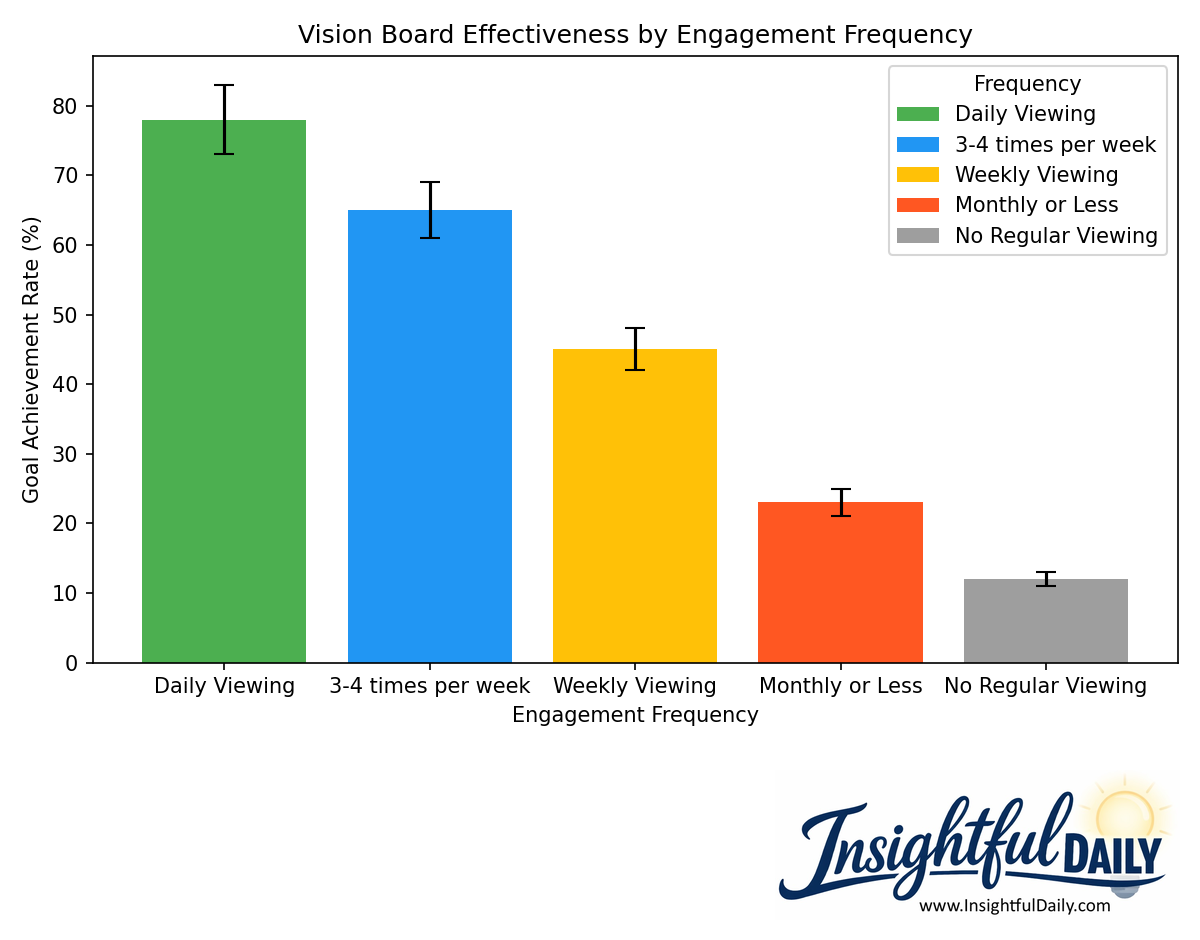
Advanced practitioners develop sophisticated systems for tracking the relationship between vision board engagement and actual goal achievement outcomes. Keep a simple log noting when you spend focused time with your vision board and any insights, ideas, or opportunities that emerge during or shortly after these sessions. Many people report that solutions to challenges or unexpected opportunities appear within days of intensified vision board practice, suggesting a strong connection between focused visualization and practical results. Consider photographing your vision board at different stages of development and goal achievement, creating a visual timeline that demonstrates the manifestation process in action. This documentation serves both as motivation during challenging periods and as evidence of the effectiveness of consistent goal visualization practices.