
Learning how to create a budget that actually works is not about tracking every dollar perfectly. For a long time, budgeting felt harder than it needed to because most systems were too detailed to keep using during busy weeks. What worked better was a simple monthly plan that showed where money was going, left room for real life, and made it easier to make decisions without constantly starting over.

Why Most Budgets Become Too Hard to Keep Using
For a long time, budgeting felt much more complicated than it needed to be. Most systems I tried became difficult to maintain after a few weeks because they required tracking every tiny purchase or following overly strict rules. What finally worked better was creating a simple plan that still worked during busy or imperfect weeks instead of trying to manage money perfectly.
Successful budgeting starts with understanding that a budget is fundamentally a spending plan, not a financial straitjacket. When you know how to create a budget that aligns with your values and lifestyle, you’re not constantly fighting against your natural spending patterns—you’re working with them. The most effective budgets incorporate flexibility buffers, account for both fixed and variable expenses, and focus on the major expense categories that have the biggest impact on your financial health rather than obsessing over small purchases that don’t significantly affect your bottom line. That makes the plan easier to keep using during real life, not just perfect weeks.
The budgets that are easiest to stick with usually have three things in common: they are simple, flexible, and easy to review when life changes.
The 50/30/20 Framework: A Simple Starting Point
The 50/30/20 budget represents one of the most sustainable and widely successful approaches to personal finance management, providing a framework that’s both simple enough to remember and flexible enough to adapt to different income levels and life situations. This budgeting method allocates your after-tax income into three major categories: 50% for essential needs, 30% for discretionary wants, and 20% for savings and debt repayment. The beauty of this approach lies in its simplicity—instead of tracking dozens of micro-categories, you focus on three broad spending areas that capture the essence of balanced financial management. When learning how to create a budget, this framework provides the perfect starting point for beginners and experienced budgeters alike.
Essential needs encompass your non-negotiable expenses that you must pay to maintain your basic standard of living and financial obligations. This 50% allocation covers housing costs including rent or mortgage payments, utilities, insurance premiums, minimum debt payments, transportation expenses, groceries, and other necessities. The key distinction here is between needs and wants—needs are expenses you cannot eliminate without significant consequences to your health, safety, or financial standing. If your essential needs exceed 50% of your income, it typically indicates that you need to either increase your income or find ways to reduce these fixed costs through strategies like downsizing housing, refinancing loans, or finding more affordable insurance options. Understanding how to create a budget that properly categorizes these expenses prevents common budgeting mistakes.
The 30% allocation for wants gives you substantial freedom to spend on things that enhance your quality of life without guilt or complicated tracking systems. This category includes dining out, entertainment, hobbies, shopping, travel, streaming services, gym memberships, and other discretionary expenses that aren’t essential for survival but contribute to your happiness and well-being. The generous 30% allocation acknowledges that completely restricting discretionary spending often leads to budget failure, while providing clear boundaries that prevent lifestyle inflation from derailing your financial goals. This approach allows you to enjoy your money while maintaining financial discipline, which is crucial when learning how to create a budget that you’ll actually follow long-term.
The simpler the budget categories became, the easier the entire system was to keep using consistently. Trying to organize every expense perfectly usually made budgeting feel more exhausting than helpful.
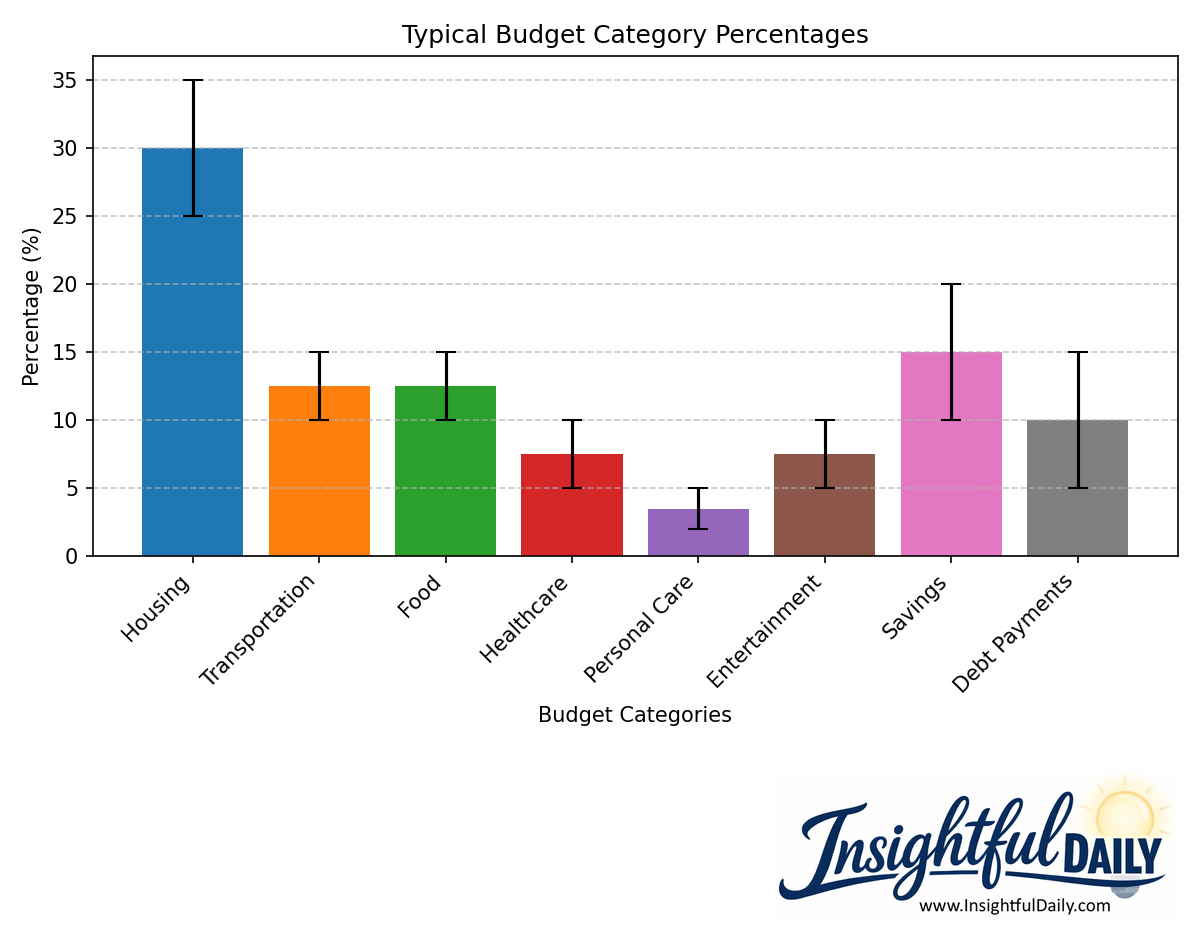
One thing I noticed with simpler budgeting approaches was that fixed essentials became much easier to manage once spending categories stopped becoming overly detailed. Focusing on a few major areas like housing, food, transportation, and savings created a much clearer picture of monthly spending without requiring constant tracking.
Real Example: A $75,000 Family Monthly Budget
Mike and Jessica, a married couple with one toddler living in suburban Phoenix, earn a combined $75,000 annually and showcase how to create a budget that accommodates family expenses while building long-term wealth. Their monthly take-home income of approximately $5,100 faces the unique pressures of childcare costs, family health insurance, and the desire to save for their child’s education while maintaining their own retirement planning. Their budget demonstrates how families can balance current needs with future goals through strategic prioritization and careful expense management. Learning how to create a budget as a family requires additional considerations for childcare, education savings, and increased insurance needs.
The family’s essential needs total $2,550 monthly, representing exactly 50% of their income through careful housing and transportation decisions. Their housing costs include $1,200 for a three-bedroom home mortgage in a good school district, $150 for utilities and home maintenance reserves, and $100 for homeowners insurance and property taxes. They strategically chose a slightly older home in an excellent school district, trading some modern amenities for lower housing costs and better educational opportunities. Transportation expenses total $450 monthly for two vehicles, including $320 for car payments, $130 for insurance covering both vehicles and increased liability for family protection. Childcare represents their largest single expense at $800 monthly for quality daycare, while groceries cost $350 for healthy family meals, and health insurance costs $200 monthly for comprehensive family coverage. This example shows how a family can cover real needs without making the monthly plan overly complicated.
Their discretionary spending of $1,200 monthly (24% of income) reflects conscious choices to prioritize family experiences while maintaining fiscal responsibility. The family allocates $300 for dining out and family entertainment, recognizing that shared meals and activities create important memories while providing breaks from cooking. They budget $200 for family travel and activities, building a fund for annual vacations and weekend adventures that enrich family life. Personal discretionary spending gets $150 each for Mike and Jessica, allowing individual freedom within the family budget framework. They allocate $200 for home improvements and family purchases, acknowledging that growing families need flexibility for furniture, clothing, and household items. An additional $200 goes to miscellaneous family expenses including gifts, celebrations, and unexpected family needs. For families, the key is balancing individual wants with shared goals.
The family directs $1,350 monthly (26% of income) toward savings and wealth building, demonstrating how families can maintain aggressive savings rates through systematic approaches. They contribute $400 monthly to their emergency fund, targeting six months of expenses due to the increased financial responsibilities of parenthood. Combined retirement contributions total $500 monthly across both 401(k) plans with employer matching, ensuring they stay on track for retirement despite family expenses. Education savings receives $200 monthly through a 529 college savings plan, building their child’s college fund through consistent contributions and compound growth. They allocate $150 monthly for additional debt payments and financial goals, including extra mortgage payments that will save significant interest over the loan term. An additional $100 goes to short-term savings for family goals like home improvements, vacation funds, and other planned expenses that require advance preparation. This comprehensive approach shows how to create a budget that serves multiple generations simultaneously.

Higher income doesn’t automatically make budgeting easier. In many cases, spending simply expands alongside income unless there’s a simple system for deciding where money should actually go each month. The biggest shift wasn’t finding a perfect budgeting system. It was making the process simple enough that it could realistically continue even during stressful or unpredictable months.
Consistency mattered far more than perfection.