

For a long time, I waited too long to say no. I would agree to something quickly, then later realize my week was already too full. Sometimes the request was small. Sometimes it was something I technically could do, but only by squeezing it into a day that already had enough in it. The problem was not that I never said no.The problem was that I usually said no too late.
By the time I finally pushed back, I had already spent time thinking about it, rearranging things, or trying to make it work. So I tried a simple experiment for one week: I practiced saying no earlier. Not harshly. Not automatically. Not to everything. I just tried to pause before agreeing and give clearer answers before my schedule became too crowded.
Here’s what helped.
What Boundaries Actually Protect
At its core, setting healthy boundaries involves creating clear guidelines for how others can treat you, what behaviors you will and won’t accept, and how you’ll allocate your most precious resources: time and energy. These invisible lines serve as protective barriers that help you maintain your sense of self while engaging meaningfully with the world around you. Unlike walls that shut people out entirely, healthy boundaries are more like gates—they allow positive interactions while filtering out harmful or draining experiences that can compromise your well-being.
The foundation of effective boundary-setting begins with self-awareness and understanding your own needs, values, and limits. This requires honest self-reflection about what energizes versus drains you, which relationships add value to your life versus those that consistently take without giving back, and how you want to spend your finite time on earth. Many people struggle with boundaries because they’ve never taken the time to clearly identify what they actually need to feel secure, respected, and fulfilled. That kind of self-awareness makes it easier to know where your limits actually are.
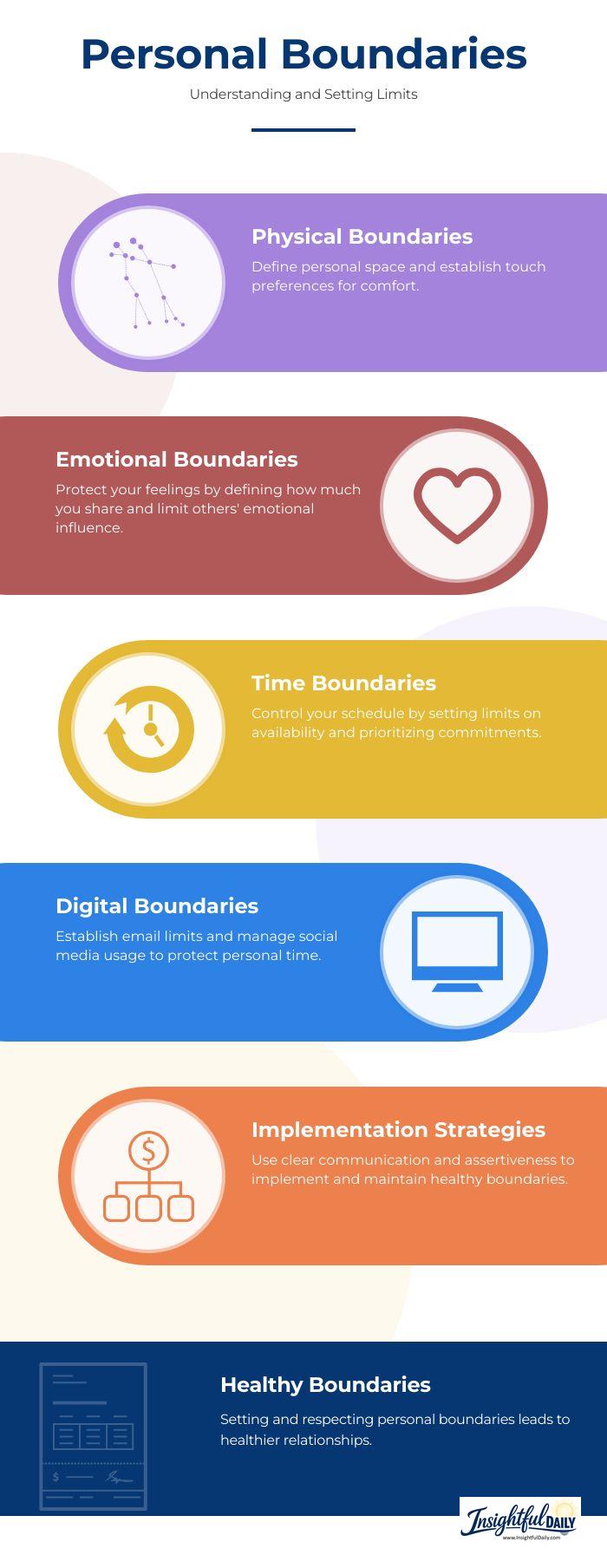
Personal boundaries encompass multiple dimensions of your life experience, each requiring specific attention and strategies for effective implementation. Physical boundaries involve your personal space, your body, and your physical environment, determining who can touch you and how, when you need alone time, and what physical spaces feel safe and comfortable. Emotional boundaries protect your feelings and mental energy from being constantly depleted by others’ drama, negativity, or unrealistic expectations, helping you maintain emotional stability while still being supportive to others. Time boundaries ensure that your schedule reflects your priorities rather than being dictated entirely by others’ urgencies, allowing you to allocate time for what truly matters to you. Digital boundaries have become increasingly important as technology blurs the lines between work and personal life, making it essential to create clear limits around when and how you engage with digital communication platforms and social media.
Why Saying No Feels Difficult
Saying no can feel uncomfortable because it often brings up guilt, fear of disappointing people, or worry that you will seem unhelpful. But saying yes to everything usually creates its own problem: less time, less focus, and more resentment. A clearer no is often kinder than an uncertain yes that you cannot realistically follow through on.
Practical Strategies for Learning How to Say No
Learning to say no usually requires both a mindset shift and a few simple phrases you can actually use. The key is learning to view “no” not as a rejection of the person making the request, but as a protection of your ability to say “yes” to the things that align with your values and priorities. When you say no to one thing, you’re inherently saying yes to something else—whether that’s quality time with family, progress on an important project, or simply the rest you need to function at your best. This reframing helps reduce the guilt often associated with boundary-setting by highlighting the positive outcomes of your choices.
Start by practicing saying no to low-stakes requests to build your confidence and skills in a safe environment where the consequences of boundary-setting are minimal. This might mean declining an invitation to an event you’re not interested in, refusing to take on an additional committee role at work when your plate is already full, or choosing not to respond immediately to every text message that comes through your phone. Notice the physical sensations and emotional responses that arise when you say no, and practice tolerating the temporary discomfort without immediately reversing your decision. This gradual approach to setting healthy boundaries allows you to build confidence and skills progressively rather than attempting to tackle the most challenging situations first.
Effective no-saying involves clear, direct communication without over-explanation or justification that might undermine your boundary. Instead of saying “I can’t help with that project because I’m really busy with other things and my schedule is packed and I have so many commitments,” try “I won’t be able to take on that project.” The simpler your response, the less opportunity there is for negotiation or pressure from others who might try to convince you to change your mind. You don’t owe anyone a detailed explanation for protecting your time and energy, and providing too much information often opens the door for others to argue with your reasoning or suggest solutions that would allow you to say yes despite your initial boundary.
Timing and tone matter significantly when setting boundaries, as they can determine whether your message is received with respect or resistance. Deliver your no with confidence and kindness, avoiding apologetic language that undermines your message and suggests that you’re not really committed to your boundary. Instead of “I’m so sorry, I really wish I could help but I just can’t right now,” try “Thank you for thinking of me. I’m not available for that.” When possible, offer an alternative if you genuinely want to be helpful—perhaps suggesting someone else who might be interested, or proposing a different way to contribute that works better with your current capacity. This approach demonstrates that your boundary isn’t about rejecting the person or the cause, but about managing your resources responsibly while still maintaining positive relationships.

Where Clear Limits Help Most
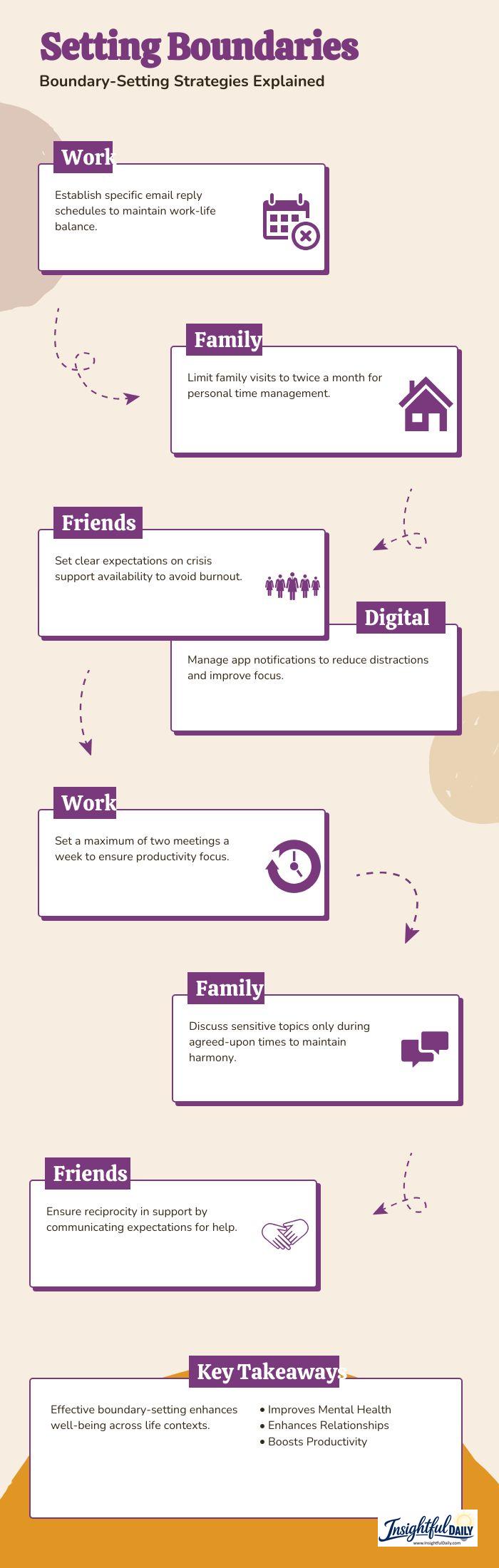
Workplace boundaries require particular attention in 2026’s evolving professional landscape, where the traditional 9-to-5 structure has given way to more flexible but potentially more invasive work arrangements. With remote work, flexible schedules, and increased job demands, the lines between professional and personal life have become increasingly blurred, making setting healthy boundaries more challenging but also more essential than ever. Effective workplace boundary-setting involves establishing clear communication about your availability, work hours, and response times with colleagues and supervisors. This means setting specific times when you’ll check and respond to emails, creating physical or temporal separation between work and personal space, and learning to delegate or refuse additional responsibilities when your plate is already full.
Family boundaries can be among the most challenging to establish, particularly when dealing with family members who have historically had unlimited access to your time and energy and may resist changes to established patterns. These boundaries might involve limiting the frequency or duration of visits, refusing to mediate family conflicts that drain your emotional energy, or establishing topics that are off-limits for discussion during family gatherings. The key is communicating these boundaries clearly and consistently, while acknowledging that family members may initially resist or test these new limits as they adjust to different relationship dynamics. Setting healthy boundaries with family often requires patience and persistence, as family systems tend to have strong momentum toward maintaining existing patterns, even when those patterns are unhealthy or unsustainable.
Friendship boundaries help maintain healthy, reciprocal relationships while preventing emotional exhaustion that can occur when friendships become one-sided or overly demanding. This includes setting limits on how often you’re available for crisis support, establishing mutual respect for each other’s time and other relationships, and creating space for your own needs within the friendship dynamic. Healthy friend boundaries also involve recognizing when a friendship has become one-sided and having the courage to either address the imbalance directly or step back from the relationship if necessary. The process of setting healthy boundaries in friendships often reveals which relationships are truly mutual and supportive versus those that have become primarily extractive or draining.
Digital and social media boundaries have become essential for mental health and productivity in our hyperconnected world, where the average person receives over 100 notifications per day across various platforms. This involves setting specific times for checking social media, turning off notifications during focused work periods or family time, and curating your online environment to support rather than drain your well-being. Digital boundaries also include managing how much personal information you share online, setting limits on engaging with controversial or emotionally charged content that doesn’t add value to your life, and establishing clear protocols for digital communication in both personal and professional contexts. Research from National Institute of Mental Health indicates that excessive social media use can contribute to anxiety and depression, making these digital boundaries crucial for mental health maintenance.
Communicating Boundaries with Confidence and Clarity
Effective boundary communication requires a balance of firmness and respect that conveys your commitment to the boundary while maintaining positive relationships and demonstrating that setting healthy boundaries is about self-care rather than rejection of others. The language you use should be clear, direct, and leave little room for misinterpretation or negotiation. Instead of saying “I’ll try to make time for that” when you know you can’t or don’t want to commit, be honest and say “That won’t work for my schedule.” This clarity prevents confusion and reduces the likelihood that others will continue pushing against your boundaries or misunderstand your level of availability and commitment.
Body language and tone of voice play crucial roles in boundary communication, often conveying more information than your actual words and significantly impacting how your message is received. Maintain confident posture, make appropriate eye contact, and speak in a calm, steady tone that reflects your commitment to the boundary you’re establishing. Avoid defensive or apologetic body language like slouching, fidgeting, or speaking in a high, nervous voice that might undermine your verbal message. Your physical presence should reinforce the verbal message that you’re serious about maintaining this boundary and that setting healthy boundaries is a normal, healthy part of how you manage your life and relationships.
Expect testing and pushback when you first establish boundaries, especially with people who are accustomed to having unlimited access to your time and energy and may feel threatened by changes to the relationship dynamic. This testing is normal and doesn’t mean your boundary is unreasonable—it often indicates that the boundary is necessary and that the person has become overly dependent on your availability. Stay consistent with your response and avoid getting drawn into lengthy explanations or justifications that might weaken your position. Simply restate your boundary calmly and redirect the conversation if needed, demonstrating that you’re committed to maintaining the limit you’ve established regardless of pressure or manipulation attempts.
When facing persistent boundary violations from individuals who refuse to respect your clearly communicated limits, it may be necessary to implement consequences that protect your well-being and reinforce the seriousness of your boundaries. This could involve limiting contact with someone who repeatedly disrespects your boundaries, leaving situations where your limits aren’t being honored, or seeking support from supervisors or human resources in workplace situations where professional boundaries are being violated. The key is following through on stated consequences consistently, as failing to do so undermines the credibility of future boundaries and teaches others that your limits are negotiable. Clear limits only work when they are communicated simply and followed consistently.
Overcoming Guilt and Boundary Setting Tips for Long-term Success
Guilt is perhaps the most common emotional obstacle to maintaining healthy boundaries, often arising from deeply ingrained beliefs about selflessness, helpfulness, and the importance of putting others’ needs before your own. This guilt often stems from internalized messages about being helpful, avoiding conflict, and putting others’ needs first that were learned in childhood and reinforced throughout life. Learning to tolerate and work through boundary guilt is essential for long-term success in setting healthy boundaries, as this emotional discomfort often leads people to abandon their boundaries before they have a chance to experience the benefits. Remember that experiencing temporary guilt doesn’t mean you’re doing something wrong—it often means you’re making a necessary change to protect your well-being that goes against old programming but serves your long-term interests.
Reframe boundary-setting as an act of service rather than selfishness, recognizing that maintaining your well-being ultimately benefits everyone in your life by allowing you to show up more authentically and generously. When you maintain healthy boundaries, you show up more authentically and generously in your relationships and commitments because you’re operating from a place of choice rather than obligation or resentment. You model healthy behavior for others, particularly children who are watching how adults navigate relationships and self-care, teaching them that it’s normal and healthy to have limits and to communicate them clearly. By protecting your own well-being through setting healthy boundaries, you ensure that you have the emotional and physical resources to sustain meaningful relationships and commitments over the long term rather than burning out from overextension. Boundaries actually strengthen relationships by creating clarity, reducing resentment, and fostering mutual respect, allowing connections to be based on genuine desire rather than obligation or fear. When you consistently honor your own limits, you also give others permission to do the same, creating healthier relationship dynamics for everyone involved.